The Accidental Recipient Who Got the Real Me
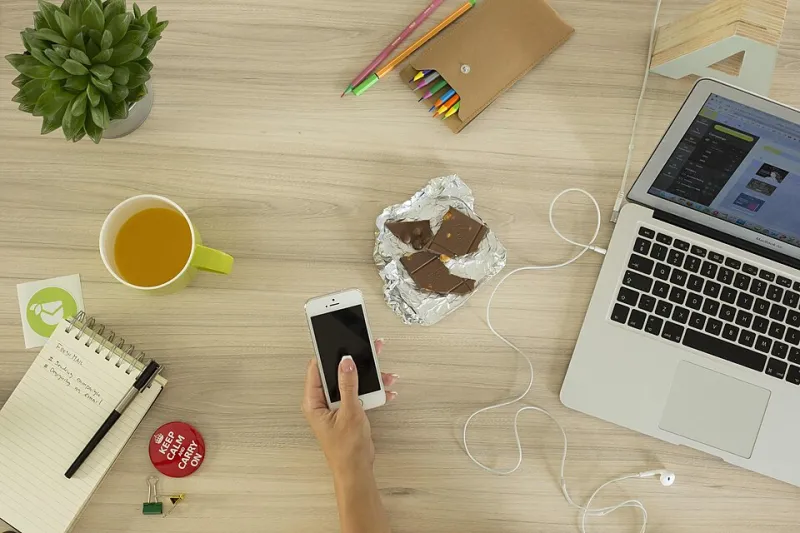
Photo: Chris Adamus, CC0, via Wikimedia Commons
I was standing in the Trader Joe’s parking lot when I sent it. The text was three paragraphs long, unedited, and honest in a way I usually reserve for my therapist’s office or the notes app I swear no one will ever read. It was meant for my sister. It went to my mother-in-law instead.
For about four seconds, I felt fine. Then I watched the little blue bubble appear, and the world tilted.
The Draft I Almost Didn’t Send
The message was not cruel. That’s important. It wasn’t a rant or a list of grievances. It was the truth about how invisible I had been feeling in my own house—how I had been saying “I’m fine” at family dinners while mentally cataloging all the ways I wasn’t. I had been editing myself for so long that I forgot what my real voice sounded like. My sister got the unedited version of me. My mother-in-law got it by accident.
I had spent months curating. There was the version of me for my husband’s family: pleasant, easygoing, low-maintenance. There was the version for my own parents: competent, settled, not too much. There was the version for my friends: funny, self-aware, always good for a group chat joke. And then there was the version I sent to my sister at 7:42 p.m. on a Tuesday—the one who knew that my laugh had been a little too loud at Thanksgiving and that I had been sleeping on the couch more often than I admitted.
When I realized what I’d done, I did the most mature thing possible: I put my phone in the glove compartment and drove home in silence, convinced I had just detonated a relationship I actually cared about.
The Pause Before the Reply
She didn’t respond right away. That was the worst part. The message sat there, delivered, seen, and unanswered for forty-seven minutes. I know it was forty-seven because I checked. I rehearsed explanations. I drafted apologies. I considered moving to a different time zone and starting over under a new name.
Then her reply came: “I hear you. Can I call you?”
No “how could you say this to me.” No hurt feelings about being the accidental recipient. No lecture. Just a question that made space for me to answer honestly.
We talked for an hour. She told me she had felt the same way in her own marriage years ago, back when she was raising two kids and trying to keep a job and a smile going at the same time. She didn’t try to fix it. She didn’t tell me what to do. She just listened in that steady way she has, the way that makes you feel less like a problem to be solved and more like a person who is allowed to be complicated.
Why We Edit Ourselves for the People We Love
I’ve been thinking about that accidental text for weeks now. Not because it was embarrassing—though it was—but because of how much energy I had been spending on quality control. I had built an entire internal review board for my feelings. Every honest sentence had to pass through three departments: Is this too much? Will they worry? Will this change how they see me?
The people we love are often the ones we edit for the most. We want to be easy to love. We want to be the version of ourselves that doesn’t require a follow-up conversation or a tissue box. But somewhere in all that polishing, I had started to lose track of what was real and what was performance.
My mother-in-law didn’t get the edited version. She got the draft. And she didn’t flinch.
The Gift of a Wrong Turn
There’s a strange relief that comes from being caught. Not in a gotcha way, but in the way that a storm finally breaking feels like relief. The pressure stops. The performance ends. You find out, usually, that the sky does not fall. The person on the other end of the phone is still there, still willing to listen, still related to you by marriage and, now, by something a little more honest.
I’m not recommending accidental confession as a communication strategy. I’m not going to start sending my unfiltered thoughts to the wrong contacts just to see what happens. But I am trying to bring a little more of that accidental honesty into the conversations I actually choose to have. I’m trying to say “I’ve been struggling” before it becomes a three-paragraph text. I’m trying to let the people who love me see the real version, not just the one I’ve carefully formatted for their comfort.
It turns out that being known is worth the risk of being seen. Even when the message goes to the wrong person. Especially then.