The Night My Gratitude Journal Became a Place to Tell the Truth
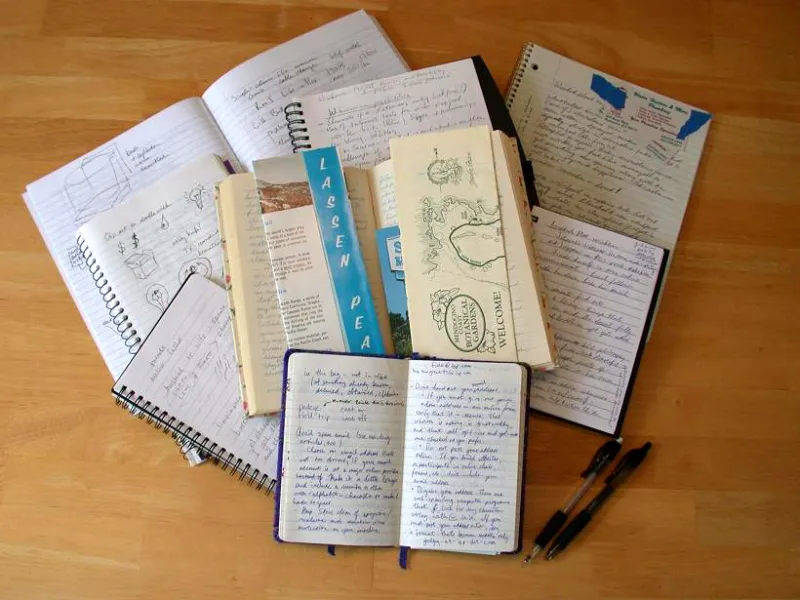
Photo: Dvortygirl, CC BY-SA 3.0, via Wikimedia Commons
It started the way everything starts in January: with a resolution and a fresh notebook I didn't need. I bought a gratitude journal at a Target in suburban Ohio, the kind with prompts printed in gentle cursive — Three things that brought you joy today. I was thirty-four, recently laid off, and quietly convinced that if I just appreciated my life hard enough, it would start cooperating.
For the first six weeks, I was a gratitude machine. My morning coffee. My sister's phone call. The way the light hit my kitchen floor at 7 a.m. I filled those pages like a student who'd figured out what the teacher wanted.
Then came the night in March when I sat down, picked up the pen, and realized I had nothing nice to say.
The Entry That Broke the Rules
I'd had a brutal day. A rejection email from a job I'd wanted, a fight with my partner that neither of us could remember starting, and a low-grade dread that had been humming in my chest for weeks. The prompt asked what I was grateful for. I stared at it for a long time.
Then I wrote: I'm grateful that tomorrow is another day, because today was not one I want to keep.
That's not gratitude. That's a sigh with a punctuation mark. But something loosened in my chest when I wrote it, something that six weeks of listing sunsets had never touched.
Here's what nobody tells you about gratitude practice: it can become another way to silence yourself. Another performance. Another voice telling you that your actual feelings — the resentment, the exhaustion, the grief that doesn't care what month it is — are inconvenient for the narrative.
When Thankfulness Becomes a Muzzle
Psychologists have a term for the pressure to feel good about feeling bad: toxic positivity, and Americans have turned it into a seasonal sport. Every January, we're handed a fresh start and an implicit threat — this year, be better, be happier, be grateful.
But forced gratitude isn't gratitude. It's denial wearing a cardigan. When I wrote grateful for my health while ignoring that I hadn't slept in a month, I wasn't practicing appreciation. I was practicing avoidance, just with nicer handwriting.
The research on gratitude is real — studies consistently link it to improved mood and stronger relationships. But the fine print matters. Gratitude works when it's honest. A 2022 study out of UC Riverside found that people who wrote about genuinely meaningful blessings benefited far more than those who went through the motions. Going through the motions was, apparently, worse than nothing.
I had been going through the motions for six beautiful, useless weeks.
The Journal Became a Museum of Real Things
After that March night, my journal changed. It stopped being a gratitude journal and became something better: a truth journal that occasionally included gratitude.
Some entries were angry. I'm grateful my mother taught me to cook, and I'm furious that she's using that against me right now. Some were grief-stricken. Some were just tired — the kind of tired that sleep doesn't fix.
And here's the strange part: the gratitude got more real too. When I stopped forcing it, the things I actually appreciated stood out like coins on a beach. My partner making me tea without being asked. A friend who sat with me on the phone for an hour saying almost nothing. The specific, unremarkable miracle of a Tuesday that didn't hurt.
What I'd Tell Anyone Starting One This January
If you're holding a fresh journal and feeling the pull of the new year, keep it. But make one rule: nothing in those pages has to be nice.
Write the hard entries. Write I'm grateful I got through today on the days that's all there is. Write about the thing you're dreading. Write the sentence you'd never say out loud. Your journal isn't a highlight reel for a version of you that doesn't exist. It's a room where you get to be the whole mess of a person you actually are.
The notebook I bought that January is full now. Some pages are genuinely, boringly grateful. Some pages are the rawest things I've ever written. I needed both. Turns out the path to feeling thankful runs straight through everything you're not ready to say — and the only way out is to pick up the pen and say it anyway.