The Smile I Keep on My Lock Screen
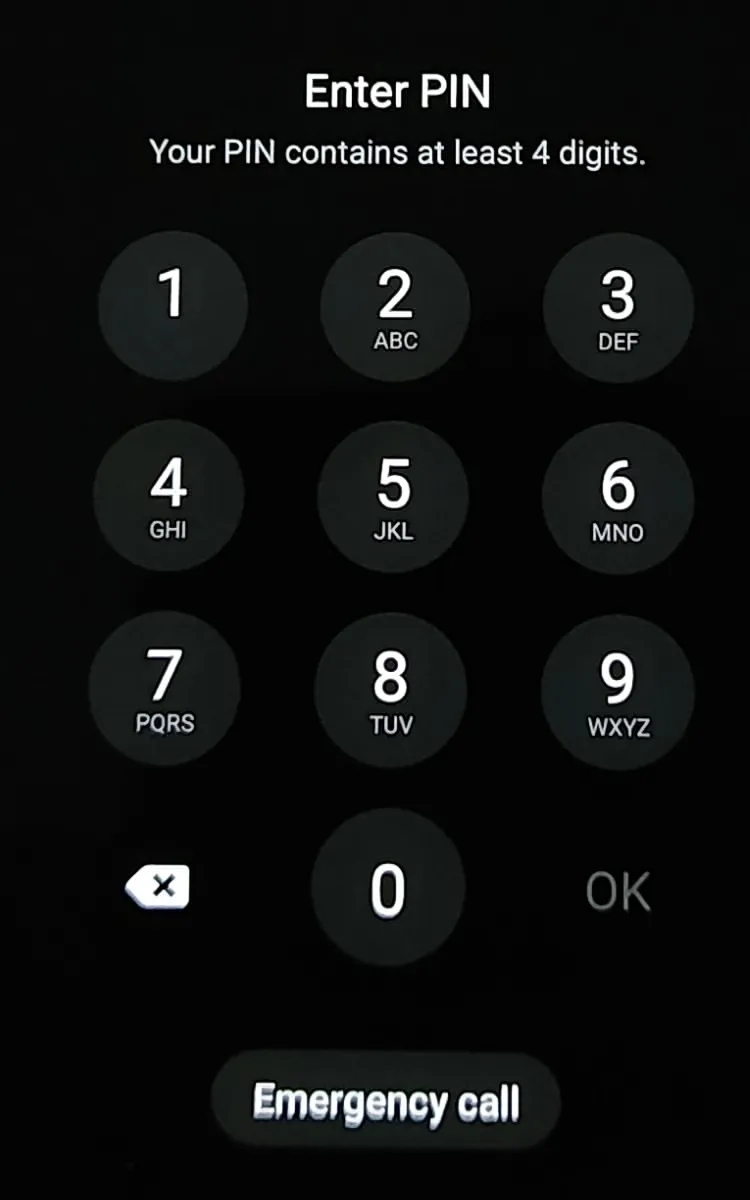
Photo: Mykhal, CC0, via Wikimedia Commons
A few autumns ago, my phone lit up on the kitchen counter with a photo of my ex smiling in a blue hoodie at a minor league baseball game. The text was from my sister. The photo wasn’t. It was his contact picture—the one I’d set years earlier because I liked the crooked way he smiled when he thought the camera wasn’t looking. He was no longer my person. He was still my notification.
I didn’t change it that day. Or the next. Or for a year.
The Notification That Still Said His Name
At first, I told myself it was practical. Changing a contact photo requires opening a contact card, scrolling past old details, deciding on a replacement. Who has time for that on a Tuesday? But practicality was a thin coat of paint over something softer and more stubborn. Every time a friend texted me, his face appeared at the top of the screen for half a second. Not enough to hurt. Just enough to remind me that some part of my brain still filed him under current.
The phone didn’t know we were over. The phone only knew the settings I had given it.
I became weirdly protective of the photo. I turned off message previews for a while, not because I didn’t want to see him but because I didn’t want anyone else to see me seeing him. I archived our thread but kept the contact card. I bought a new phone case instead of a new phone. These were not decisions, exactly. They were tiny delays dressed up as chores.
Muscle Memory Is a Thumb, Not a Heart
Grief is supposed to look dramatic—rain on a window, a song in a parking lot, a carton of ice cream with a spoon standing in it. Mine looked like a thumb hovering over a settings menu. It looked like opening the contact card, hovering over Edit, and then locking the phone to go fold laundry.
The thumb is a loyal creature. It knows where his name sits in a thread. It knows the shape of his initials. It knows that if I type the first three letters, the phone will fill in the rest. Digital muscle memory doesn’t care about closure. It cares about repetition.
For months, I confused that muscle memory with love. Maybe I still loved him. Maybe I was just accustomed to him. The truth was less cinematic: I didn’t want to make the breakup more official than it already was. His photo on my lock screen was a small, private refusal to let the story end in every room of my life at once.
The Ritual of Not Deciding
There is a particular kind of grief that lives in admin. The email you don’t archive. The box of their things you don’t label. The streaming password you don’t change. None of it means you’re waiting for them back. It means you’re waiting to be ready to be a person who has already let go.
I made little rituals out of not deciding. I’d open the contact card on Sunday nights, when the week felt tender, and tell myself I’d deal with it after the holidays. Then after the holidays became after my birthday. Then after my birthday became after the anniversary of the breakup, which I pretended not to remember and remembered anyway.
One night, a friend texted me a photo of her dog wearing a birthday hat. My phone lit up, and there he was again, smiling his old smile, presiding over a dog in a party hat. I laughed. Then I felt absurd. Then I felt sad. Then I put the phone face down and watched half a movie I don’t remember.
What Changing the Photo Would Have Meant
Here is what I was afraid of: that changing the photo would mean the relationship was not just over but filed. That it would move from the messy present tense to the neat past. That my phone would become neutral territory again.
And maybe a smaller fear: that I would change it and feel nothing. That the absence of his face would not wreck me. That I had already let go more than I wanted to admit, and the photo was just the last place I could pretend otherwise.
Grief doesn’t ask permission. It also doesn’t send a calendar invite. It arrives in the grocery store, in a song, in the two seconds before you remember the person isn’t yours anymore. The contact photo was one of the few griefs I could control. I could keep it. I could delay it. I could decide when to reopen the wound.
The Day I Finally Changed It
I changed it on a random Thursday, not a meaningful one. That felt important. I didn’t want to give the moment a ceremony. I replaced his photo with a picture of a lemon tree I’d taken on a walk the week before. It was blurry. It was mine. It had nothing to do with him.
I expected to feel triumphant. I felt mostly like I’d put down a bag I’d been carrying so long I’d forgotten it had a handle. The phone buzzed a few minutes later, and for the first time in a year, the notification was just a notification.
The muscle memory is still there. Sometimes my thumb hesitates over the contact card, and I remember the old photo, the old name, the old story. But I don’t need to reopen it to prove I loved him. I don’t need to keep his smile on my lock screen to keep the memory alive.
Letting go wasn’t one dramatic deletion. It was a series of small, unobserved edits. One of them finally stuck.