Small Debts I've Been Carrying Around Like Loose Change
Photo: CIPHR Connect, CC BY 2.0, via Wikimedia Commons
There's a jar in my head where I keep small debts. Not money — nothing so easily settled. I mean the tiny interpersonal IOUs that never got paid, the ones too minor to mention and too persistent to forget. Most of the people involved have almost certainly moved on. I have not.
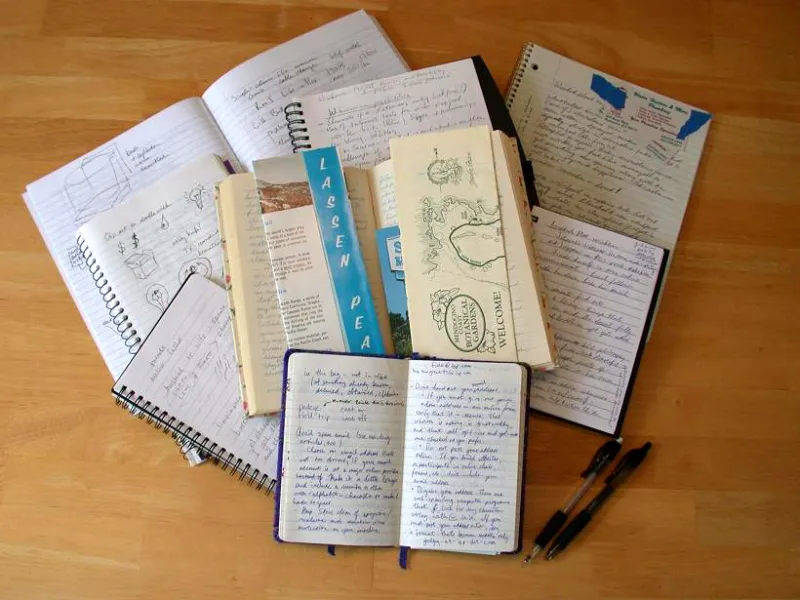
I've been taking inventory lately, partly because journaling about it felt more productive than 2 a.m. ceiling-staring, and partly because I've started to suspect these little guilts aren't random. I think they're pointing at something.
The Snipped Reply, Fall 2019
A former coworker — genuinely funny, genuinely kind — sent me a long text after I'd left the job. Something warm about how much she'd valued working together. I was in a rush, in a parking lot, in a mood. I replied with two words. "Aw, thanks!"
Five years later, I can still feel how thin that reply was. She never brought it up. We drifted, the way threads do. And I've noticed something interesting: the guilt isn't really about her. It's about who I was in that parking lot — someone so depleted by that job that I had nothing left over for a person who deserved better than my leftovers.
The Thank-You Note That Never Existed
When my grandmother died, a neighbor I barely knew showed up with food and stayed to help my mother clean the kitchen. I said thank you at the time. I meant it. But my mother raised me on handwritten notes, and that one never got written.
Here's the thing I've made peace with: I don't think mailing it now, a decade late, would land the way I imagine. The moment has passed. Some apologies and some gratitudes are for the relationship — and some, I'm learning, are really for us. Writing that note in my journal, acknowledging that her kindness mattered and my follow-through failed, settles something in me. That has to count for something.
The Friend I Ghosted During Her Hard Season
This one weighs the most, so I'll keep it short. A friend was going through something brutal — I won't name it, because she wouldn't — and I went quiet. Not out of malice. Out of that cowardly, common instinct to not know what to say and therefore say nothing.
We're friendly again. We will probably never be close again. And I've decided the repair here isn't a dramatic apology out of the blue, which would really be about relieving my conscience at her expense. The repair is behavioral: I don't go quiet on people anymore. Ever. I send the awkward, imperfect "I don't know what to say but I'm here" text. Her ghosting taught me its cost, and I pay that forward daily.
The Email I Left in 'Read'
A former mentor asked me for a small favor — an intro, maybe thirty seconds of my time — and I let it sit until it calcified into silence. The debt here isn't the favor. It's that someone who invested in me learned I don't reciprocate reliably. That one changed how I treat every ask that comes in now. Nothing sits unanswered for more than a day, even if the answer is no.
So Which Debts Do You Actually Pay?
Here's the framework I've landed on, for what it's worth:
Reach out if the wound might still be live. If the person could still feel it — if the silence was the injury, not just a symptom — a brief, no-excuses apology is worth the awkwardness. Keep it short. Don't make them manage your guilt.
Let it go if reopening it only serves you. Some old guilts are better honored as lessons than as late-night texts to people who've rebuilt their lives without you.
Write the unsent version either way. Seriously. The letter you never mail still does something. Guilt that stays vague keeps you anxious; guilt that gets named becomes instruction.
The jar in my head isn't empty. But it's lighter, and more importantly, I've stopped adding to it — because the real debt was never to them. It was to the version of me who wants to be someone who shows up, replies fully, and sends the note.