Thirty Boring Mornings: What I Found in the Gaps Where My Phone Used to Be

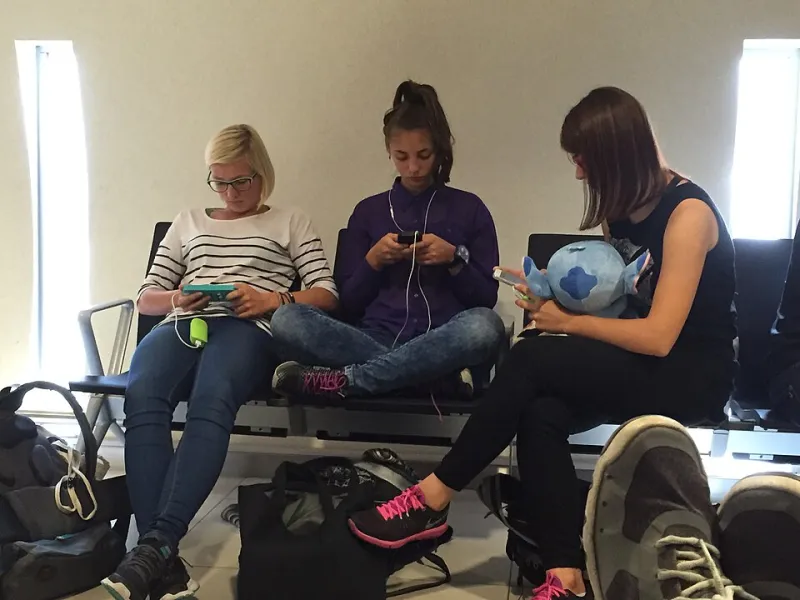
Photo: Julius Schorzman, CC BY-SA 2.0, via Wikimedia Commons
The rules were embarrassingly simple. For thirty mornings, the first half hour of my day belonged to nothing. Coffee could be made, coffee could be drunk. A window could be looked out of. A walk could be walked, slowly, without a destination. What could not happen: phone, podcast, news, music, email. No input. Just me and the ridiculous amount of time it apparently takes for water to boil when you're watching it.
I started this experiment because I'd noticed something I didn't like. Every gap in my day—the elevator, the microwave, the walk to the mailbox—had gotten filled. Automatically, instantly, without my consent really being asked. And somewhere in there, I'd stopped being able to sit in a chair without reaching for something.
Week One: The Withdrawal Nobody Warns Me About
The first three mornings, I want to be honest, were awful. Not tragic—awful the way skipping your usual snack is awful. Restless, twitchy, a low hum of you're forgetting something. I kept picking up my phone, feeling its weight, putting it back down like a person trying to quit cigarettes in a house full of cigarettes.
What I learned first: my boredom wasn't empty. It was loud. All this stuff came rushing into the space the scrolling used to occupy—tomorrow's meeting, an email I sent Tuesday, a conversation from 2019 I apparently was still litigating. The doomscroll hadn't been filling a void. It had been muffling one.
Five Things the Quiet Told Me
1. My anxiety had a schedule. By day six I noticed the dread always peaked around 8:40 a.m.—right before work, never before. Naming it took its power down a notch. It wasn't a fog rolling over my whole life; it was a specific fear wearing a fog costume.
2. I wasn't tired. I was overstimulated. I'd been calling myself exhausted for two years. But ten days in, I started waking up before my alarm, actually rested. Turns out a brain that never gets a quiet minute doesn't distinguish between rest and just less noise.
3. Boredom is where my own thoughts live. Somewhere around week two, I started having ideas again—half-formed, mostly useless, but mine. A birthday card concept for my sister. A realization about a friendship that had gone cold. The mental equivalent of a junk drawer finally getting sorted.
4. The window is genuinely entertaining. This sounds fake, but there's a cardinal that works the feeder on my fire escape, and by day fourteen I knew his patterns. I grieved a squirrel once this month. I'm not proud. I'm also not taking it back.
5. Missing the phone didn't mean missing the content. By week three, the urge to scroll faded, but a ghost of it stayed—a hand drifting to a pocket, an itch with no source. I've decided that ghost is just habit, and habits die of neglect if you stop feeding them. Mostly true so far.
What Fills the Gap Now
The month is over and I haven't gone back to the old way—not perfectly, not like a monk. I check my phone in the morning, because I have a job and a mother who worries. But the first thirty minutes stay quiet, and here's the strange arithmetic of it: giving away half an hour has somehow produced more time. Fewer 11 p.m. doom spirals. Fewer mornings that started behind before my feet hit the floor.
I don't think boredom is a cure for anything. My anxiety didn't pack up and leave; it just got a name, a schedule, and a much smaller room. But I do think the numbing was costing me something I didn't know I was paying. The gaps weren't empty. They were just unlit.
Turns out all I had to do was stand in one long enough to find the light switch.