How Washing One Bowl Became My Emergency Contact
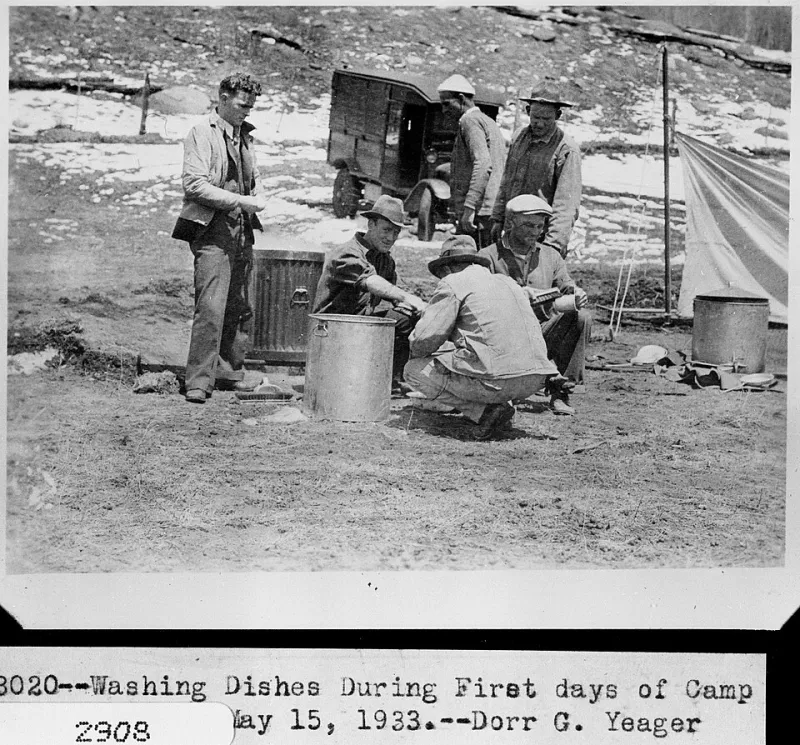
Photo: Rocky Mountain National Park, Public domain, via Wikimedia Commons
The crying started somewhere around 3 p.m., the way it often does—no warning, no obvious trigger, just a sudden overflow I couldn't cap. I was standing in my kitchen, phone in hand, staring at a text I'd already read six times. The words blurred. My chest did that tight, hollow thing. And before I could talk myself into a breathing exercise or a walk around the block, my feet carried me to the sink.
There was one bowl in it. A plain white ceramic bowl, the kind you buy in a set of six and then somehow lose five of. It had dried oatmeal crusted on the rim. I turned on the hot water, squirted in more dish soap than necessary, and started scrubbing.
The Anatomy of an Ugly Cry
Let me be clear: this was not a graceful, single-tear situation. This was the full performance—runny nose, hiccuping sobs, the works. The kind of cry that leaves you feeling like a wrung-out dishrag. And in the middle of it, I was washing a bowl.
I didn't plan it. I didn't read about it in a wellness article or hear it from a therapist. My body just moved toward the warm water and the repetitive motion, like a plant leaning toward a window. I've since learned that this is a thing—that rhythmic, focused tasks can help regulate a nervous system that's gone haywire. But in the moment, all I knew was that the feel of the sponge against ceramic was the only thing keeping me from spiraling completely out of my body.
Why the Sink, Not the Sofa
When I'm overwhelmed, the last place I want to be is on the couch with my thoughts. Sitting still gives the sadness too much room to stretch out. But washing a dish? That's a finite task. It has a beginning (turn on the tap), a middle (scrub the crust), and an end (place it in the drying rack). There's no ambiguity. No room for existential dread. Just warm water, slippery soap, and a single object that needs to go from dirty to clean.
My therapist once told me that grounding techniques work best when they engage your senses. The sink is a full sensory experience: the heat of the water, the smell of lemon-scented soap, the sight of bubbles rising, the sound of the faucet running, the feel of the sponge in my hand. It's impossible to be completely lost in my head when my hands are busy in the present moment.
And there's something else—something about the rhythm. Scrub, rinse, scrub, rinse. It's steady and predictable, like a metronome for my breath. After a minute or two, my sobs would slow to match the pace of my scrubbing. Not because I was trying to calm down, but because my body couldn't keep up the frantic crying and the steady washing at the same time.
One Object, One Breath
The bowl was clean in less than two minutes. But I didn't stop there. I found a mug with a coffee ring, then a butter knife, then a small plate I'd used for toast. I wasn't trying to clean my kitchen. I was trying to stay afloat. Each object was a tiny anchor, something to hold onto while the storm passed.
I've since come to think of this as my "one object at a time" philosophy. When everything feels like too much, I don't try to fix the whole kitchen. I don't even try to fix my whole mood. I just wash one thing. And then, if I still need it, I wash another. The point isn't the cleanliness. The point is the care. The point is the act of tending to something small and ordinary when the big things feel impossible.
There's a particular comfort in caring for an object that doesn't ask anything of you. The bowl doesn't need me to explain why I'm crying. It doesn't offer advice or ask if I've tried yoga. It just sits there, waiting to be held and cleaned. And in return, it gives me a job—a simple, doable job that lasts exactly as long as I need it to.
The Bowl Doesn't Judge
I've had a complicated relationship with self-care over the years. I used to think it meant bubble baths and candlelit journaling—things that felt more like a performance of wellness than actual relief. But the older I get, the more I realize that real self-care is often unglamorous. Sometimes it's brushing your teeth when you'd rather stay in bed. Sometimes it's eating a granola bar because it's the only thing you can manage. And sometimes it's washing a single bowl while you cry, because it's the only thing that keeps you from disappearing entirely.
There's no shame in that. If anything, there's a quiet kind of dignity in it. You're showing up for yourself in the smallest possible way, even when everything in you wants to opt out. You're saying, I may not be able to fix this right now, but I can rinse this plate. That counts. It counts more than you know.
What I've Learned from the Suds
It's been a few months since that particularly bad afternoon, but I still find myself at the sink on hard days. The bowl is still there—the same plain white one, with a tiny chip on the rim I've grown oddly fond of. I don't always cry when I wash it now. Sometimes I'm just tired, or anxious, or feeling that vague, nameless heaviness that settles in for no reason. But the ritual is the same: turn on the water, squirt the soap, scrub until the world feels a little less sharp.
And every time, I'm reminded of something my grandmother used to say: A clean sink is a fresh start. She meant it practically—she was a neat freak in the best way—but I've taken it as something more. A clean sink is a promise to yourself that you'll keep going. That you'll do the next small thing, and then the next. That you don't have to solve your whole life today. You just have to wash one bowl.
So if you're crying right now, or if you're numb, or if you're just barely holding it together, I see you. And I hope you find your bowl. I hope you find whatever small, repetitive, unglamorous task reminds you that you're still here—and that being here, even in pieces, is enough for today.